
2026 Fundraising: What Changed?
Early Startups Fundraising Due Diligence Data Room
If fundraising used to feel like a fast break, pitch, term sheet, close, 2026 is shaping up to look more like a full season. The pace is slower, the referees are stricter, and the scoreboard (your metrics) is on display the entire time.
Founders who treat fundraising as a one-off event will feel the squeeze. Founders who treat it like year-round training, building proof, tightening operations, and staying “deal-ready”, will win more consistently, even if each round takes longer.
What’s changing in the 2026 funding cycle
1) The game clock is longer (due diligence is deeper)
Investors are spending more time validating the fundamentals: revenue quality, margins, retention, cash discipline, governance, and risk. That means more questions, more documents, and more follow-ups, often across multiple decision-makers.
What it feels like for founders: fewer “quick closes,” more structured processes, and longer gaps between “we’re interested” and “we’re wiring.”
2) Fewer rounds per year (and more selective checks)
Capital is still available, but it’s more selective. Many investors are concentrating bets, doing fewer deals, reserving more for follow-on, and taking longer to build conviction.
Translation: you may get fewer “at-bats,” so each one needs better preparation.
3) Metrics pressure is higher (proof beats potential)
Story still matters, but it needs receipts. Investors want clear evidence of momentum: consistent growth, improving unit economics, retention/engagement signals, and a path to durable profitability (or at least disciplined burn).
If your numbers are messy: the timeline stretches.
If your numbers are sharp: you move forward faster, even in a slower market.
The new fundraising timeline (think: season planning)
Instead of “raise when you need it,” many teams are shifting to a longer runway plan:
-
6–9 months before raise: build the “data room + narrative” foundation
-
3–4 months before raise: start warm conversations, tighten metrics reporting, pre-empt objections
-
8–12+ weeks for active raise: outreach → meetings → partner meetings → diligence → terms → legal
-
Post-close: maintain investor updates so the next round starts earlier, and easier
In 2026, the teams that win often begin the next round right after the last one closes (not because they’re constantly fundraising, but because they’re constantly prepared).
A founder’s toolkit for long-term fundraising readiness
Here’s the practical playbook to stay ready without living in pitch mode.
1) Financial modeling that answers investor questions fast
Your model shouldn’t just “look good.” It should explain what happens next, with levers and trade-offs.
Include:
-
18–24 months runway plan with monthly cash flow (in USD)
-
Base / Upside / Downside scenarios (and what you’ll do in each)
-
Unit economics (CAC, payback period, gross margin, contribution margin)
-
Growth drivers (pipeline, conversion, retention, whatever matters for your business)
-
Hiring plan tied to outcomes (not just headcount)
Goal: when an investor asks “What breaks this plan?” you can answer in two minutes, with numbers.
2) A governance setup that builds trust
In longer diligence cycles, governance becomes a signal: “Can this team scale responsibly?”
Put the basics in place early:
-
Clean cap table and ownership records
-
Simple board/advisor cadence (even if informal today)
-
Clear approval policies (spend limits, signing authority, key vendor contracts)
-
Proper corporate docs (entity records, option plan where relevant)
-
A consistent monthly metrics pack (same format, same definitions)
Good governance doesn’t slow you down. It prevents slowdowns later.
3) A diligence-ready data room (so you don’t scramble mid-round)
The easiest way to extend a fundraising timeline is to assemble documents after investors ask. Build once, update monthly.
Your data room should cover:
-
Financials (P&L, balance sheet, cash, forecasts)
-
Revenue proof (contracts, invoices, cohort data)
-
Product + operations (roadmap, security basics, key processes)
-
Legal (entity docs, IP assignments, material agreements)
-
Team (org chart, key hires, comp bands if applicable)
4) Narrative + proof: one message, supported by numbers
In 2026, the strongest pitches connect these dots:
-
Why now (market timing)
-
Why you (team advantage)
-
Why this model wins (how you grow profitably or sustainably)
-
Why the round size makes sense (use of funds tied to milestones)
Keep it simple: “We’ll use this capital to hit X milestone by Y date, which unlocks Z next step.”
5) Match with aligned investors (fit matters more when timelines stretch)
When cycles are longer, misalignment is expensive. The wrong investor can cost months.
Look for alignment on:
-
Stage and check size
-
Sector focus and geography
-
Decision process speed
-
Portfolio support style
-
Expectations on burn vs. profitability
This is where WOWS Global can help: not by pushing introductions at random, but by helping you package your readiness, clarify your milestone plan, and connect through a structured process to investors whose mandate matches your stage and story, so you spend more time in high-quality conversations and less time chasing dead ends.
Investor Readiness Checklist (quick draft)
If you want a companion download, here’s a strong “one-page” checklist:
-
Business one-liner + pitch deck updated in the last 30 days
-
18–24 month financial model (USD) + 3 scenarios
-
Monthly metrics pack (definitions included)
-
Cohort/retention or repeat-rate view (where relevant)
-
Unit economics: CAC, payback, gross margin
-
Clean cap table + fundraising history summary
-
Data room: legal, financial, contracts, IP, HR basics
-
Governance basics: approvals, signing authority, reporting cadence
-
Clear use of funds tied to milestones + timeline
-
Target investor list based on mandate fit (not brand-name chasing)
WOWS' Take: Final whistle
In 2026, fundraising isn’t about taking more shots, it’s about taking better shots. That’s where WOWS Global is in its element. We help founders get deal-ready with the right prep: clean financials, clear milestones, and a narrative backed by real metrics.
From there, we guide the matchmaking, pairing you with investors who are actually built for your stage, sector, and round size, so the process moves with fewer stalls and more signal. Schedule a call with our experts today.
Related Posts
-
Fundraising 409A Valuation Cap Table Management Investor
WTF Is 409A and Why Should I Care?
Learn what a 409A valuation is, why it matters for employee stock options and how it impacts founders, investors, taxes and diligence, plus how WOWS Global can help. -
Fintech AI Startups Early Startups SEA
The Dip in SEA Fintech Funding: What Startups Can Learn
SEA fintech funding has dipped, but capital is still on the field for disciplined teams. This article unpacks what the new funding rules look like and how founders can upgrade models, governance, monetization, and capital stacks. Learn where investor expectations have shifted and how WOWS Global can help you get raise ready. -
Blockchain Singapore Early Startups SEA Startups SEA
GaiaSwap: The Eco-Commodity DEX Bringing Transparency & Inter-Operability to Fragmented Carbon Credits & I-REC(E)s markets
In a sea of generalist crypto venues, GaiaSwap zeroes in on eco-commodities with transparent pricing and compliant workflows. We unpack what sets it apart and the milestones to watch. -
Startup & Venture Capital Early Startups Founder Investment
How to Choose Which Startup to Invest In
Choosing a startup isn’t a coin toss. This quick-read playbook covers market sizing, founder fit, unit economics, risk mapping, and terms, written in a toned-down sports recap style. Wrap up with “WOWS Insight,” where WOWS Global explains how it matches investors with companies that fit their thesis, stage, and traction. -
Seed Indonesia Early Startups Private Equity
Arummi Raises Seed Round to Bring Indonesian Cashew Milk to the World
Arummi Foods, Indonesia’s homegrown cashew milk pioneer, has closed its Seed round, accelerating its mission to make healthier, sustainable dairy alternatives accessible to millions. In a market where 70%+ are lactose intolerant, Arummi has scaled from lab experiment to 650+ retail stores, 3,000+ cafés, and 750,000+ liters sold. Backed by BEENEXT, Korea Investment Partners, and Fondation Botnar (supported by SAGANA), Arummi is turning local cashews into global innovation. Proud partner: WOWS Global. -
SEA Early Startups Funding VC AI in Southeast Asia
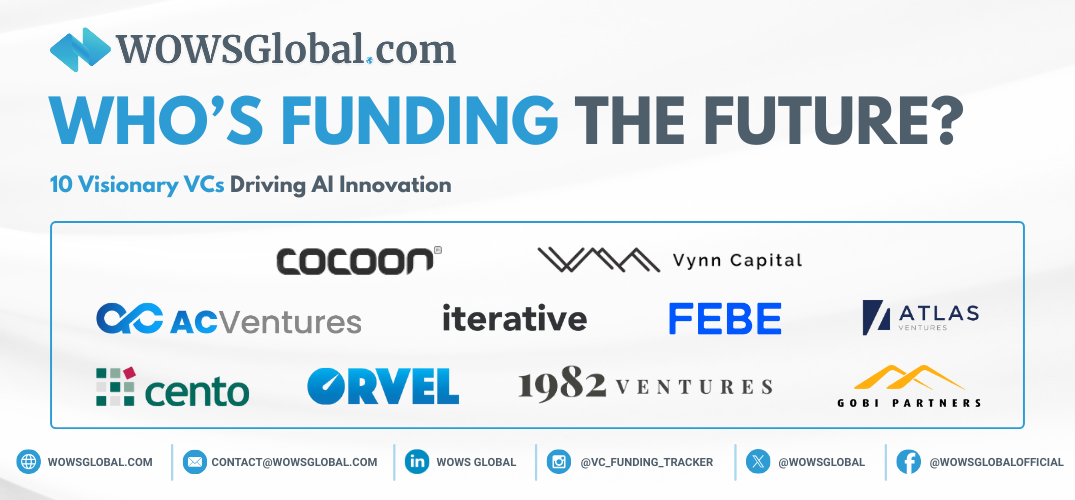
Who’s Funding the Future? 10 Visionary VCs Driving AI Innovation
Explore 10 standout venture capital firms driving Southeast Asia’s AI-first startup ecosystem, from early-stage champions to fintech and deep tech backers.