
Investment Highlights April 2026: SEA Builds The Rails And MENA Turns Credit Into Product
SEA MENA Highlight Investment Funding 5 Minutes
April was not a fireworks month. It was a plumbing month.
Across Southeast Asia, capital moved toward the rails: GPU compute, data centres, climate supply chains, recommerce logistics, fintech balance sheets and Vietnam’s capital-market infrastructure. The month’s best-funded companies were not selling vague “AI transformation.” They were selling compute, underwriting, inspections, recycling capacity and distribution.
In MENA, the story was even more explicit: credit kept doing the heavy lifting. Sovereign sukuk set the base layer. Fintechs wrapped debt into working-capital and consumer-credit products. Regulated platforms raised capital around trust, contracts, tokenised assets and local consumer demand. After a softer Q1 funding backdrop in the region, April’s deal flow suggested that money is still moving, but it wants collateral, cash flow, compliance or a very clear right to operate.
Southeast Asia: Infrastructure Gets Its Month
The April tape in SEA had a clear message: apps are optional; infrastructure is not.
The month’s capital was not evenly spread across every founder story. It clustered around companies and funds that could point to hard outcomes: more compute, more lending capacity, more recycling throughput, more reliable construction coordination, more regulated financial access and more efficient secondhand-goods supply chains.
April Deal Scoreboard: SEA
-
Salmon Group raised $100 million through a $60 million equity round and a $40 million public bond. The Philippines-focused credit fintech said proceeds would support product expansion, distribution, bank capitalisation and lending-book growth. Its bond was priced at 13.7% under a Nordic bond programme, a reminder that fintech balance sheets now need more than venture equity to scale.
-
Singapore-based EPG landed a $100 million Series B+ for data-centre infrastructure. DealStreetAsia’s April deal monitor listed the round as backed by Decarbonization Partners, putting data centres squarely inside the region’s climate and infrastructure capital stack.
-
Circulate Capital hit a $220 million first close for its second climate fund. The Singapore-based circular-economy investor is targeting $300 million, with returning LPs including Coca-Cola, Danone, Dow, P&G, BII, Proparco, IFC and Builders Vision. The fund will invest across circular supply chains and recycling in markets including India, Indonesia, Thailand, Vietnam, the Philippines and Malaysia.
-
Nava raised a $22 million Series A to build GPU compute and AI data-centre capacity across APAC. The round was led by Greenoaks, with RTP Global and Unicorn India Ventures participating. The company is also establishing Singapore as its regional headquarters.
-
Kitar raised more than $10 million in pre-Series A funding. The Southeast Asia-focused recommerce platform, which starts with secondhand smartphones, was backed by Source Code Capital, Hike Capital and MindWorks. The company plans to use the capital for AI, quality inspection, supply-chain infrastructure and offline collection in Indonesia.
-
BIOBOT Surgical secured S$10 million in fresh Series C capital. ClavystBio and ZIG Ventures backed the Singapore-headquartered surgical robotics company, which has built robotic-assisted biopsy and treatment technology for prostate cancer.
-
OnSite raised S$1.7 million in seed funding for AI-powered construction and facilities coordination. The round was co-led by Tin Men Capital and Alter Global, with participation from Hustle Fund and others. DealStreetAsia described the product as an AI messaging platform with a legal-grade audit trail for field teams.
-
Vietnam’s capital-market plumbing also moved. HDBank signed a strategic partnership with the London Stock Exchange to help Vietnamese companies access international equity and bond markets. Techcom Securities raised a $488 million unsecured syndicated loan, while Ho Chi Minh City launched a 500 billion dong, or roughly $20 million, venture fund focused on areas including AI, semiconductors, biotech, green tech and digital transformation.
What This Tells Investors
AI is being funded where it has a body. April’s AI money leaned toward compute, data centres, industrial operations, construction workflows and inspection-heavy commerce. Nava is selling GPU capacity. EPG is in data-centre infrastructure. Muun AI is targeting industrial intelligence systems for manufacturing and energy-intensive operations. OnSite is applying AI to construction coordination. The common thread is not “AI wrapper.” It is AI attached to expensive, messy operational bottlenecks.
Credit has become a capital-structure story, not just a product story. Salmon’s $100 million mix of equity and public-bond capital shows how fintechs with lending books increasingly need instruments that match the asset they are building. Venture equity can fund product and growth. Debt funds origination. The better founders will know the difference.
Climate capital is still available when the thesis has measurable industrial output. Circulate Capital’s first close is notable because it came with strategic corporates, DFIs and a specific deployment map. In a cautious fundraising environment, LPs appear more willing to back climate funds that can connect capital to tonnes, capacity and supply-chain upgrades.
Vietnam is trying to widen the capital funnel. The HDBank-LSE partnership, Techcom Securities syndicated loan and Ho Chi Minh City venture fund all point to a market that wants more than startup rounds. It wants equity access, bond access, margin capacity, public-private early-stage capital and sector targeting.
The fundraising bar remains high. DealStreetAsia noted that Asia private-market fundraising remains subdued, with uncertainty weighing on activity. It also reported that SEA-focused VC fundraising weakened sharply in 2025, with only four final closes for the year versus 17 in 2024 and 33 in 2023. April’s raises therefore matter not because the window is wide open, but because they show what is still getting through it.
MENA: Credit, Compliance And Local Demand
MENA’s April story was not simply that debt is alive. It was that debt is becoming programmable.
At the sovereign level, Saudi Arabia and the UAE continued building local-currency market depth. At the startup level, the biggest fintech stories used debt as product fuel. In between sat a new class of regulated infrastructure: contract automation, digital signatures, tokenised real estate and consumer platforms that are trying to localise demand rather than copy-paste global playbooks.
April Deal Scoreboard: MENA
-
Saudi Arabia completed a SAR16.946 billion April sukuk issuance. The National Debt Management Center allocated the issuance across five tranches maturing between 2031 and 2041. That is not startup funding, but it matters: sovereign curves are the floor on which private credit markets learn to price risk.
-
The UAE issued AED1.1 billion in dirham Islamic Treasury Sukuk. The auction drew AED5.20 billion in bids, or 4.7 times the issuance size, across tranches maturing in October 2027 and February 2033. The stated market function was straightforward: deepen the dirham yield curve and support local debt-market infrastructure.
-
UAE fintech Comfi raised $65 million in pre-Series A funding through a mix of equity and debt. The equity was led by Iliad Partners, with Yango Ventures and Raw Ventures participating. The credit facility came from Partners for Growth, while Shorooq helped structure a mezzanine facility. Comfi provides B2B BNPL for SMEs, letting suppliers offer payment terms while receiving cash faster.
-
Egypt’s Lucky raised $23 million in Series B equity and debt. Investors included Disruptech, DPI through Nclude, Suez Canal Bank and OneStop. The consumer-credit platform plans to expand credit products, infrastructure and North Africa reach after reporting profitability by the end of 2025.
-
Saudi digital-contracting platform Signit raised a $15 million Series A. Raed Ventures led the round, with participation from STV, Seedra, Takamol and Suhail. Signit operates as a licensed Trust Service Provider and is expanding from e-signatures into AI-powered contract lifecycle management.
-
Saudi e-commerce platform Aya raised a $7 million Series A. The round was led by RAED Ventures, with participation from Nuwa Capital, Sanabil, Joa Capital and Khwarizmi Ventures. Aya’s model is demand-driven fashion: test designs, read customer engagement, then produce.
-
UAE-based Homegrown Ventures closed its debut fund at $22.8 million. The fund will back early-stage CPG and FMCG brands across food, wellness and lifestyle, with a focus on “better-for-you” consumer products in MENA, South Asia and select global markets.
-
Saudi real-estate tokenisation startup Jozo raised $2.21 million in seed funding. The round was led by Sheikh Hamad Bin Saedan Real Estate Company as strategic partner. Jozo is building a platform to let individuals access real-estate investment with smaller ticket sizes.
What This Tells Investors
MENA’s debt machine is becoming more specialised. The sovereign layer is still active, but the more interesting venture signal is in embedded credit. Comfi is not borrowing for decoration; debt is core to the working-capital product. Lucky’s equity-plus-debt round follows the same logic in consumer credit.
Regulation is becoming a moat. Signit’s licensed trust-service status, Jozo’s real-estate tokenisation angle and the UAE’s continued sukuk-market development all point to the same investor lesson: in MENA, permissioned infrastructure can be more investable than unregulated speed.
Local consumer still has room, but the bar is sharper. Aya and Homegrown Ventures are not betting on generic e-commerce exuberance. They are backing local consumption, fast feedback loops, brand discipline and category depth. That is a different mood from growth-at-any-cost marketplaces.
The region is not immune to caution. Wamda’s Q1 2026 report showed regional startup funding down to $941 million, with geopolitical tensions and fragile macro conditions weighing on sentiment. April’s deal flow did not erase that caution; it showed where investors are willing to lean in despite it.
Who’s Writing The Checks: April’s Starting Lineup
In Southeast Asia, the checkwriters split into three camps.
First came the infrastructure and climate capital: Decarbonization Partners in data centres, Greenoaks in GPU compute and Circulate Capital’s LP base of corporates and DFIs in circular supply chains.
Second came credit-aware fintech capital. Salmon’s round brought together equity backers and public-bond investors, reflecting a market where lending businesses need both growth capital and balance-sheet funding.
Third came specialist early-stage and vertical investors: Source Code Capital, Hike, MindWorks, Tin Men Capital, Alter Global, ClavystBio, ZIG Ventures and Wavemaker Impact. These were not spray-and-pray checks. They were targeted bets on recommerce, construction AI, medtech robotics and industrial intelligence.
In MENA, the capital stack looked more layered.
Sovereign and quasi-sovereign market builders set the base through Saudi and UAE sukuk activity. Fintech investors and credit providers backed Comfi and Lucky. Saudi venture names including Raed Ventures, STV, Seedra, Takamol, Suhail, Sanabil and Khwarizmi supported platforms in contracts, AI and commerce. Meanwhile, Homegrown Ventures and Speedinvest’s MEA activity pointed to continued fund formation around consumer brands and regional early-stage technology.
WOWS Take
April’s message is clean: capital is available, but it wants a job description.
In SEA, the strongest stories were not “big market, big dream” pitches. They were infrastructure pitches. More compute. More data-centre capacity. More recycling throughput. Better inspections. Better field coordination. Better credit access. Better capital-market pipes.
In MENA, the most interesting activity sat where finance becomes product. Comfi turns working capital into B2B checkout infrastructure. Lucky turns consumer credit into a scaled platform. Signit turns trust and contracts into software. Jozo turns real-estate access into smaller digital tickets. Sovereign sukuk issuance keeps the yield curve alive underneath it all.
For founders, the lesson is tactical: pitch the capital structure as clearly as the market size. Know what should be funded by equity, what should be funded by debt, what requires a licence and what can become institutional infrastructure.
For investors, the lesson is even simpler: April did not reward noise. It rewarded rails.
FAQs
Why did infrastructure dominate SEA’s April highlights?
Because the region’s most visible April deals clustered around capacity and operations: data centres, GPU compute, recycling supply chains, construction coordination, recommerce logistics, surgical robotics, lending books and capital-market access. That suggests investors are prioritising companies that can turn capital into measurable infrastructure, not just user growth.
Is MENA still mainly a debt story?
Yes, but the story is evolving. Sovereign sukuk remains important, but startup debt is increasingly embedded inside products. Comfi and Lucky raised blended equity-and-debt rounds because their products depend on underwriting, repayment behaviour and financing capacity. That makes credit both a funding source and a product engine.
What kind of founder narrative is working now?
The April narrative is discipline. Founders need to show why they deserve equity, how they will use debt, what regulatory permissions they have or need and how their product becomes part of a larger operating system. The market is still funding ambition, but it is asking for receipts.
Related Posts
-

Investment Southeast Asia Fintech AI 5 Minutes
September Investment Highlights: Fintech Consolidation, AI Infrastructure and Southeast Asia's Exit Window
Billion-dollar fintech M&A, a record IPO and an AI infrastructure reset: here's what moved Southeast Asia investments in September 2026, and what it means for your next raise. -

AI Investment Southeast Asia Capital 4 Minutes
Investment Highlights August 2026: Southeast Asia's Big-Check Era Takes Hold
The money is back in Southeast Asia, and it's arriving in bigger checks than ever. Capital jumped 137% to $12.8B this year while deal count fell 30%. Inside: Acrab's $130M AI raise, three blockbuster IPOs, and what the flight-to-quality market means for your next round. -

Investment Highlight Southeast Asia SEA 7 Minutes
Investment Highlights July 2026: Southeast Asia's Exit Window Swings Wide Open
July 2026 saw Southeast Asia's exit window swing wide open: GCash's record IPO run, MoMo's buyout interest, and fresh capital flowing into robotics, insurtech and AI. -
Investment Highlight SEA AI 6 Minutes
Investment Highlights June 2026: Southeast Asia Builds the AI Backbone While the Exit Window Cracks Open
Southeast Asia's June 2026 was deliberate, not euphoric. Capital concentrated around the AI infrastructure buildout, deep tech and health tech kept punching above their weight and, for the first time in three years, the exit window cracked open with GCash parent Mynt filing for a record US$1.5 billion IPO. We break down the deals that mattered, who's writing the cheques and what it all means for founders and investors. -
SEA Investment MENA Private Credit Fintech 7 Minutes
Investment Highlights May 2026: SEA Puts Data Centres on the Balance Sheet While MENA Turns Credit Into Infrastructure
May’s investment activity across SEA and MENA shows capital is still moving, but with sharper discipline. From data centres and green infrastructure in Southeast Asia to private credit and fintech rails in MENA, investors are backing companies with stronger fundamentals and clearer capital stacks. -
Emerging Markets SEA Bangkok Events Investment 3 Minutes
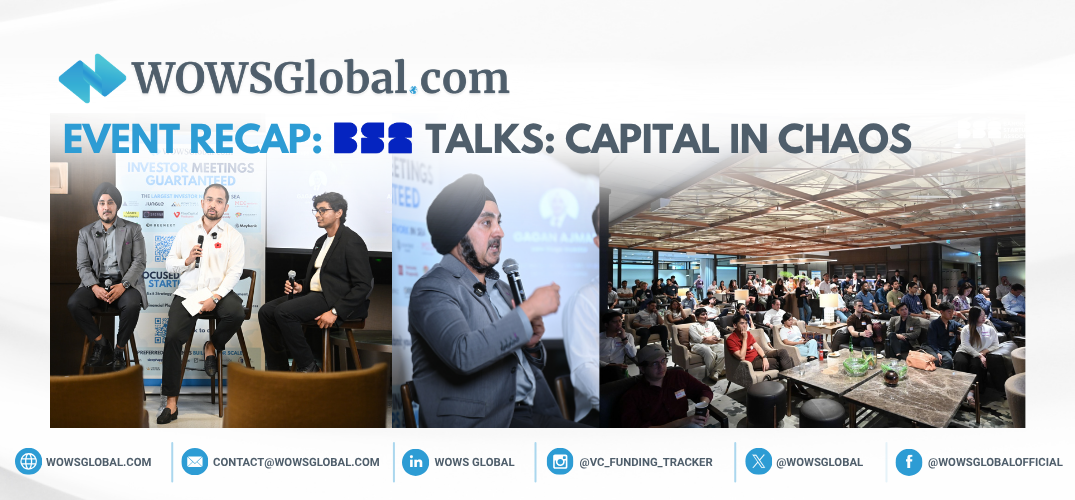
WOWS Global's Gagan Ajmani joined Bangkok Startup Association's Capital in Chaos event to unpack fundraising discipline, investor readiness and traction today.
At Capital in Chaos in Bangkok, WOWS Global CEO Gagan Ajmani discussed how founders can raise smarter in uncertain markets by focusing on traction, track record, investor readiness, and the right funding path for their business.