
Pre-Seed Funding in 2026: Amounts, Investors and Terms
Pre-Seed Funding Startup Funding Venture Capital 6 minutes
For many startups, the first outside capital comes through a pre-seed funding round. This is the money that helps founders turn an idea into a working business, build a minimum viable product, hire early employees, test demand and reach the milestones needed for a larger seed round.
In 2026, the pre-seed market is active but selective. Investors are asking harder questions about customer demand, capital efficiency and the path to the next round.
What Is Pre-Seed Funding?
Pre-seed funding is capital raised during the earliest stage of a startup's life.
A company at this stage may have an idea, prototype, early product or small group of users. Revenue can help, but it is not always required. Investors are often making a decision based on the founders, the size of the problem, early evidence of demand and the team's ability to execute.
The money is commonly used to build the first product, hire a small team, test demand and reach enough traction for the next raise.
The goal is not simply to raise as much money as possible. A good pre-seed round should give the startup enough runway to reach a clear next milestone.
How Much Is a Pre-Seed Funding Round in 2026?
There is no single correct amount.
Carta's Q1 2026 data shows that smaller rounds below $1 million have become more common, while the share of rounds between $1 million and $2.5 million has declined. Larger rounds above $2.5 million still happen, but they are less representative of the typical startup.
A practical way to think about pre-seed funding is:
-
Under $500,000: Product development, validation and initial hiring
-
$500,000 to $1 million: Team building, launch and early traction
-
$1 million to $2.5 million: Stronger traction, experienced founders or businesses with higher development costs
-
Above $2.5 million: Possible for highly competitive companies, but not a useful benchmark for every founder
These ranges are not rules. A software startup may need less capital than a biotech or hardware company.
Founders should work backward from the milestones they need to hit. If the next seed investor will expect meaningful revenue, for example, the pre-seed budget should be built around reaching that level of traction with a sensible cash buffer.
Who Invests in Pre-Seed Startups?
Pre-seed investors usually fall into a few groups.
Angel investors invest their own money and may bring practical advice, industry knowledge and useful introductions.
Micro-VC and pre-seed funds specialize in early-stage companies. They can often write larger cheques than individual angels and may reserve capital for future rounds.
Accelerators and incubators may provide funding alongside mentorship, investor access and structured support.
Family offices and strategic investors can also participate, particularly when a startup fits a sector or industry they already understand.
In Southeast Asia, founders may speak with investors across Singapore, Malaysia, Indonesia, the Philippines, Thailand and Vietnam rather than limiting the raise to one country.
The regional market remains selective. Southeast Asia's 2025 funding recovery was uneven, and investors continued to place greater emphasis on companies with clear scale potential and sustainable growth.
What Terms Are Common in Pre-Seed Funding?
Many pre-seed rounds are not priced equity rounds. Instead, founders often raise using a SAFE, or Simple Agreement for Future Equity, or a convertible note.
Carta reported that convertible notes accounted for only 7% of pre-seed rounds in Q1 2026, showing how dominant SAFEs have become in the U.S. early-stage market.
Y Combinator also provides a post-money SAFE designed for Singapore companies, although founders should obtain local legal advice before using any standard document.
Here are the main terms to understand.
Valuation cap
A valuation cap sets the maximum company valuation used when the SAFE converts into equity.
Carta's 2025 pre-seed data showed median post-money SAFE caps of about $10 million for rounds between $250,000 and $1 million, and about $15 million for rounds between $1 million and $2.5 million.
These are U.S. benchmarks, not automatic targets for Southeast Asian startups. Sector, geography, traction, founder experience and investor competition can all change the number.
Discount
Some SAFEs and convertible notes give investors a discount when the investment converts in a future equity round.
A 20% discount, for example, may allow the investor to convert at a price 20% below the price paid by new investors, depending on the agreement.
Interest and maturity
A SAFE normally does not carry interest or have a maturity date.
A convertible note is debt, so it usually includes both.
Pro rata rights
An investor may ask for the right to invest in a future round so they can maintain their ownership percentage.
Founders should understand how these rights could affect future allocations and the amount of space available for new investors.
How Much Equity Should You Give Up?
This is where founders need to be careful.
A high valuation cap can look attractive, but valuation is only one part of the deal. Founders who stack several SAFEs can lose track of how much ownership they have effectively promised.
With a post-money SAFE, dilution is easier to estimate. If an investor puts $500,000 into a startup at a $10 million post-money valuation cap, that represents roughly 5% before later financing effects.
Add more investors, an employee option pool and a future seed round, and founder ownership can change quickly.
Before signing, model the cap table under several scenarios. Ask what happens if you raise another SAFE, expand the ESOP pool or complete a priced seed round at a different valuation.
Understanding dilution before accepting money can save founders from difficult surprises later.
What Do Pre-Seed Investors Look for in 2026?
Investors know a pre-seed startup will not have the same metrics as a Series A company. But they still need a reason to believe.
Can this team execute? Founder experience, speed, technical ability and insight into the problem matter heavily.
Is the problem important? A polished product means little if customers do not care enough to use or pay for it.
Is there early proof? This could include users, pilots, revenue, letters of intent, repeat usage, waitlists or strong customer interviews.
Is the market large enough? Venture investors generally need companies that can become very large.
Is the company capital-efficient? Investors want to know what the round will fund and what milestone the spending should unlock.
This matters even more in a market where capital is becoming concentrated around the strongest opportunities. In Q1 2026, for example, AI companies accounted for around half of pre-seed dollars in Carta's dataset.
For founders outside the hottest sectors, that does not mean funding is unavailable. It means the investment case needs to be particularly clear.
How to Prepare for a Pre-Seed Raise
Start with the numbers.
Build a financial model showing how long the round will last, where the cash will go and what needs to happen before the next financing.
Then prepare a clear pitch deck covering the problem, solution, market, traction, business model, team, fundraising amount and use of funds.
Your cap table should also be clean before investor conversations begin. Know who owns what and how options, SAFEs or convertible notes could affect dilution.
Finally, build a focused investor list. Approaching 30 investors who actively back companies at your stage, sector and geography can be more effective than contacting 100 poorly matched names.
Fundraising is not only about finding investors with money. It is about finding investors whose mandate actually fits your business.
Pre-Seed Funding in Southeast Asia
For Southeast Asian founders, pre-seed fundraising can be both local and regional.
Singapore remains a major capital hub, but startups across Malaysia, Indonesia, Vietnam, the Philippines and Thailand can raise from local angels, regional funds and Singapore-based investors in the same round.
The important part is fit. Look for investors whose cheque size, stage, sector and geographic mandate match your company.
Southeast Asia's 2025 funding data showed signs of stabilization in the second half of the year, but capital remained concentrated and the recovery was not evenly spread across markets.
That makes strong preparation even more important in 2026. Founders need a clear story about what they are building, why the opportunity matters and exactly what the new capital will allow the company to achieve.
Raise Enough to Reach the Next Milestone
Pre-seed funding should buy progress, not just time.
The right amount is the amount that gives your startup a realistic runway to prove something important: a working product, stronger usage, meaningful revenue, regulatory progress or another milestone that changes how future investors see the company.
Before accepting a SAFE or other investment terms, understand the dilution, model the next financing and make sure the investor is a good fit for the journey ahead.
Preparing to raise pre-seed funding?
WOWS Global works with founders across Southeast Asia on fundraising preparation, pitch decks, financial models, cap tables and investor matching. Schedule a call with WOWS Global or submit your pitch deck to start the conversation and prepare your company for the next stage of growth.
Related Posts
-
SAFE Convertible Notes Startup Funding Fundraising Startup Valuation Equity Financing 6 Minutes
SAFE vs Convertible Note: Which Is Right for Your Raise?
SAFE vs. Convertible Note: Understand the key differences between SAFEs and convertible notes, including interest, maturity, repayment risk, dilution, and investor protection, to choose the right fundraising option for your startup. -
Startup Fundraising Finding Investors Investor Readiness Investor Matchmaking Venture Capital 6 Minutes
Guide to Finding Investors for Your Startup: 2026 Update
Discover how to find the right investors for your startup in 2026. This guide explains how to become investor-ready, identify suitable angels, VCs, family offices and corporate investors, build a targeted outreach list, create a clear pitch, and manage fundraising from initial contact through due diligence and term sheet discussions. -
Venture Capital Southeast Asia Startup Investor 9 Minutes
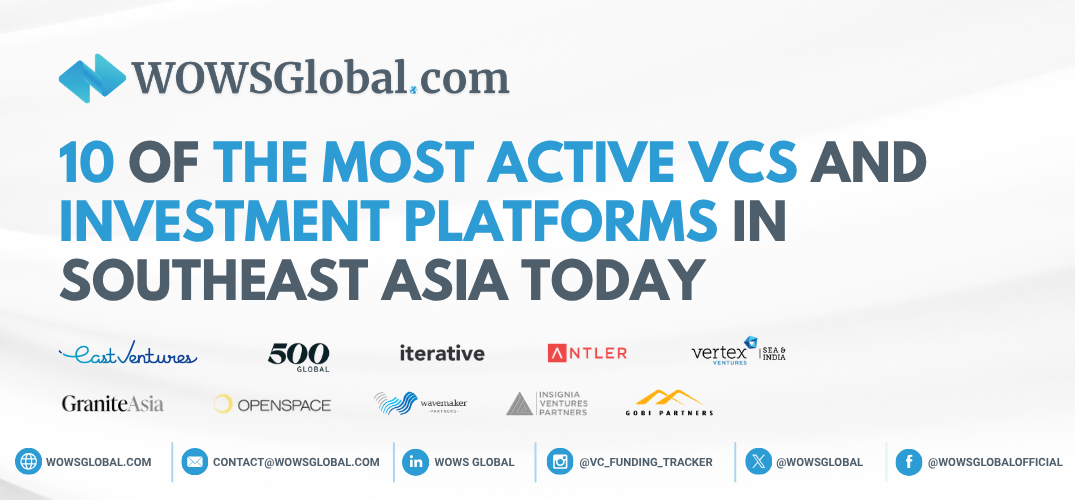
A Guide to Southeast Asia's Most Active VCs
The Southeast Asian (SEA) startup market is in a very healthy state. This guide will explain exactly why before getting into details on 10 of the most active VCs in the region -

Startup Funding SEA MENA Startups 5 Minutes
June 2025 Investment Snapshot: Capital Hits a Heatwave
June 2025 lit up with a VC heatwave across Southeast Asia and MENA. From insurtech unicorns and migrant fintech to AI wearables and atmospheric water, this month’s deals show the frontier is flush with cash and big ambition. Explore the standout rounds and future-casting sectors. -
Venture Capital FEBE Ventures Seed 4 Minutes
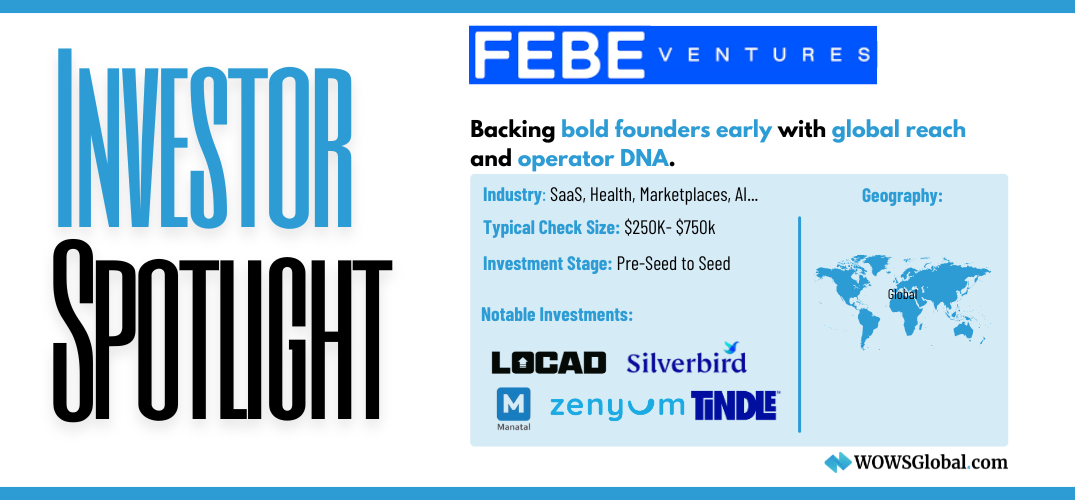
FEBE Ventures: Founders Backing Founders from Day One
More than capital, FEBE Ventures brings founder-first support, fast decisions, and real operational insight to early-stage startups across the globe. -
Venture Debt InnoVen Capital Startup Funding 5-7 minutes
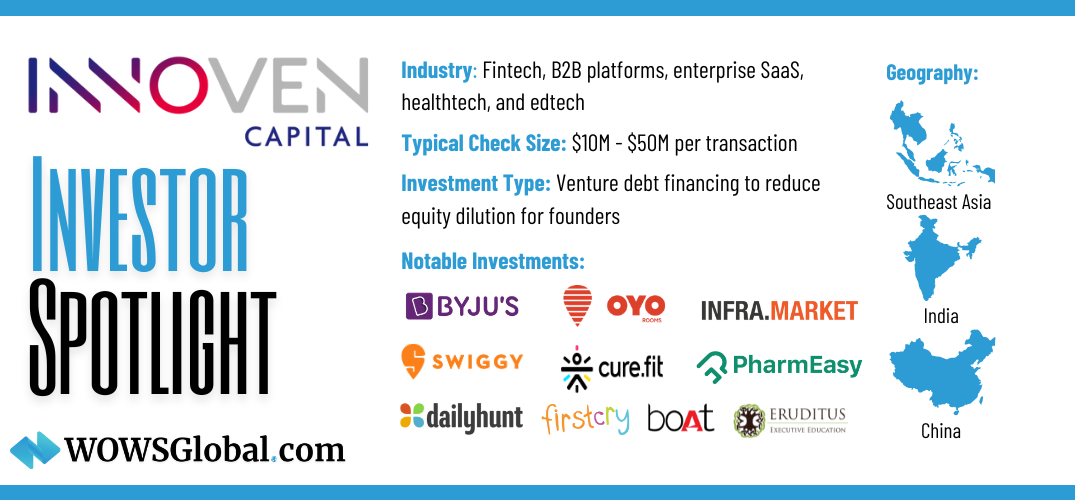
Investor Spotlight: InnoVen Capital – Powering Asia’s Startup Ecosystem with Venture Debt
For startups aiming to scale without sacrificing equity, venture debt has emerged as a crucial financial tool. InnoVen Capital, a leading venture debt provider in Asia, has helped over 180 startups grow without dilution. With a focus on India, China, and Southeast Asia, InnoVen Capital has deployed over $400 million across 250+ transactions, backing industry giants like Byju’s, Swiggy, Oyo, and PharmEasy. Learn how venture debt can be a game-changer for your startup.