
SAFE vs Convertible Note: Which Is Right for Your Raise?
SAFE Convertible Notes Startup Funding Fundraising Startup Valuation Equity Financing 6 Minutes
Early-stage founderction to support a confident valuation. Two common solutions are a Simple Agreement for Future Equity, or SAFE, and a convertible note. Both let a startup raise money now and issue equity later, but they create different obligations.
The answer: A SAFE is often better for very early-stage startups that want a fast, simple raise without taking on debt. A convertible note may be better when investors want interest, a maturity date, and stronger repayment rights, or when the company expects a priced equity round soon. Neither is automatically better. The right choice depends on your timeline, investor expectations, jurisdiction, and ability to manage dilution.
What is a SAFE?
SAFE stands for Simple Agreement for Future Equity. An investor provides capital today in exchange for the right to receive shares when a future event occurs, usually a priced funding round.
A SAFE is not a loan. It generally does not carry interest and does not have a maturity date. This reduces pressure to repay investors on a fixed deadline and can make documentation easier to negotiate. omic terms usually include a valuation cap, a discount, or both. These terms reward early investors by allowing their investment to convert at a more favorable price than the price paid by new investors in the next round.
For a deeper explanation of conversion events, valuation caps, discounts, and common risks, read WOWS Global’s SAFE notes guide.
What is a convertible note?
A convertible note is a loan intended to convert into equity later. Like a SAFE, it can delay the need to establish a full company valuation. However, because it is debt, it normally includes an interest rate and a maturity date. ying financing round occurs, the principal and accrued interest may convert into shares. The conversion price is usually determined by a valuation cap, a discount to the new round, or whichever produces the better result for the noteholder.
If the note reaches maturity before converting, the company and investor may need to negotiate repayment, an extension, or another conversion arrangement.
WOWS Global’s convertible notes guide explains the structure, key terms, and repayment considerations in more detail.
SAFE vs convertible note: the main differences
|
Area |
SAFE |
Convertible note |
|
Legal character |
Contract for future equity |
Debt that may convert into equity |
|
Interest |
Usually none |
Usually accrues |
|
Maturity date |
Usually none |
Normally included |
|
Repayment pressure |
Lower |
Higher if the note does not convert |
|
Documentation |
Often simpler |
More terms to negotiate |
|
Investor protection |
More limited |
Stronger debt-based rights |
|
Best fit |
Very early rounds and rolling closes |
Bridge rounds or raises near a priced round |
The most important difference is the presence of debt. A convertible note can become a repayment obligation. A SAFE usually remains outstanding until a conversion, liquidity, or dissolution event described in the agreement. E may be the better choice
A SAFE can work well when speed matters. A startup raising a pre-seed or seed round from several investors may be able to close investments separately without renegotiating a full set of loan terms each time.
It may also suit a company with an uncertain fundraising timeline. Because there is generally no maturity date, founders are less likely to face a repayment deadline before they are ready for a priced round.
However, simple paperwork does not mean simple economics. Issuing several SAFEs with different valuation caps can make future ownership harder to predict. Founders should model the fully diluted cap table before signing each agreement, especially when using post-money SAFEs. Post-money SAFEs can make the percentage of ownership sold easier to estimate, but they can still create significant dilution. vertible note may be the better choice
A convertible note can be appropriate when the next priced round is expected within a defined period. For example, an investor may provide bridge financing while the startup completes a larger institutional raise.
Some investors prefer notes because interest and maturity terms provide clearer protection if the next round is delayed. The debt status may also give noteholders priority in certain downside scenarios, depending on the agreement and local law.
That protection creates risk for founders. If the company cannot raise its next round, repaying the principal and interest could strain cash flow. Extensions may require fresh negotiation at a difficult moment.
Questions to ask before choosing
Before deciding between a SAFE note vs convertible note, founders should ask:
-
How soon do we realistically expect a priced equity round?
-
Could the business repay the investment if conversion does not happen?
-
Do our target investors accept SAFEs in our jurisdiction?
-
What valuation cap and discount can we justify?
-
How will the raise affect founder ownership, the employee option pool, and existing investors?
-
Are there tax, securities, accounting, or regulatory rules that change the treatment?
Review the answers with qualified legal and financial advisers. Documents developed for one market should not be copied into another jurisdiction without checking local requirements.
Which is better for your startup?
For many very early-stage companies, a SAFE offers the cleaner route because it removes interest, maturity, and repayment negotiations. For a short bridge to a planned priced round, a convertible note may provide the structure and protection investors expect.
The right instrument is the one your company can explain, model, and manage. Before signing, calculate conversion outcomes under different valuations and funding scenarios. A fast raise can create long-term cap table problems when dilution is not understood from the start.
WOWS Global helps founders prepare for fundraising, model dilution, manage cap tables, and connect with relevant investors across Southeast Asia. Request a call with the WOWS Global team to review your fundraising strategy, or submit your pitch deck for strategic investor matchmaking.
Related Posts
-
Pre-Seed Funding Startup Funding Venture Capital 6 minutes
Pre-Seed Funding in 2026: Amounts, Investors and Terms
Explore pre-seed funding in 2026, including typical round sizes, investor types, SAFE terms, valuation caps, dilution, and how founders can prepare for fundraising. -
AngelInvestors SingaporeStartups StartupFunding Fundraising InvestorMatchmaking SoutheastAsiaStartups 6 Minutes
How to Find Angel Investors in Singapore (2026)
Find angel investors in Singapore with practical strategies for building an investor list, securing warm introductions, attending startup events, and preparing your pitch for successful fundraising. -
Fundraising 409A Valuation Cap Table Management Investor 3 Minutes
WTF Is 409A and Why Should I Care?
Learn what a 409A valuation is, why it matters for employee stock options and how it impacts founders, investors, taxes and diligence, plus how WOWS Global can help. -
Early Startups Fundraising Due Diligence Data Room
2026 Fundraising: What Changed?
Fundraising in 2026 isn’t about moving faster—it’s about showing up prepared. Learn how to build an investor-ready system (modeling, governance, data room, and investor fit) so diligence doesn’t drag and your strongest conversations go the distance. -
Invest in Startups Startup & Venture Capital SAFE ESOP 4 Minutes
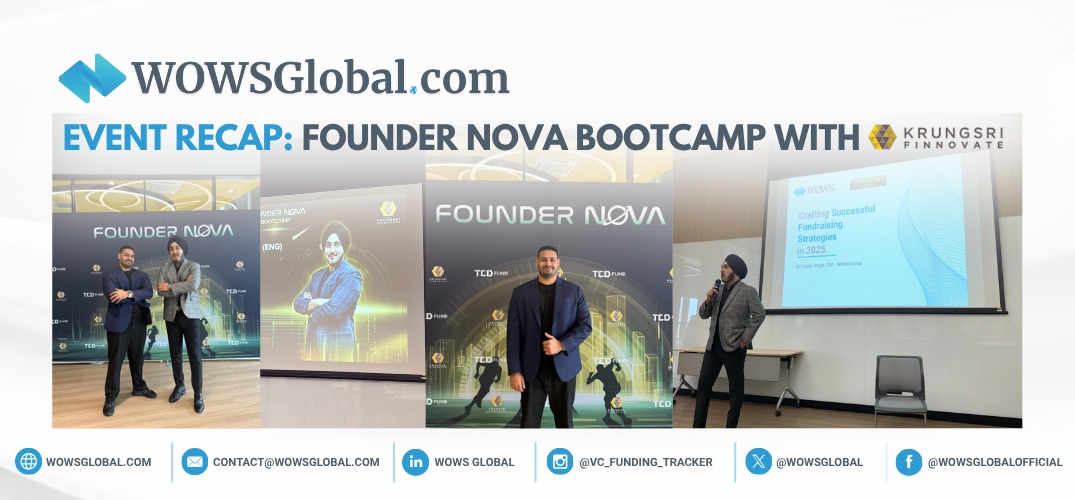
Event Recap: Founder Nova Bootcamp with Krungsri Finnovate
A practical recap of Founder Nova Bootcamp with Krungsri Finnovate, what founders learned about SAFEs, cap tables, and term sheets, and how to raise smarter in today’s market. -
Fundraising investor relations Traction Financials 3 Minutes
10 Red Flags Investors Spot Instantly (And How Founders Can Avoid Them)
From vague problems to broken cap tables, these are the 10 signals that turn investors off—plus practical fixes so you can raise with confidence.