
How to Raise a Seed Round in Southeast Asia
Seed Funding Southeast Asia Startups Startup Investment 6 Minutes
Every founder raising their first real capital asks the same question: how long is this going to take? In Southeast Asia, the honest answer used to be, longer than you want. The regional norm for a seed round runs three to six months from the first investor meeting to money in the bank, and SEA founders have historically taken roughly 50 percent longer than their peers elsewhere to reach funding milestones.
Here is the more exciting number. Founders who arrive already investor-ready have closed their seed round in as little as 45 days. That is not luck. It is the payoff of preparation, a tight process, and knowing exactly which investors to call. This guide walks through how seed funding for startups actually works across the region, and how to compress the timeline without cutting corners.
The Southeast Asia seed landscape right now
Startup funding in Southeast Asia is in a different mood than it was during the 2021 boom. Capital is flowing again, but it is concentrated. In the first half of 2025 the region raised roughly 2 billion dollars, up about 7 percent year over year, yet the money clustered into fewer, larger deals, with Singapore absorbing the lion's share of both capital and deal count. That pattern carried into 2026: fewer rounds, bigger checks, and a noticeably higher bar to clear.
For a founder, that means two things. First, a typical seed round in the region lands between 1 and 3 million dollars, with Singapore serving as the natural hub for cross-border raises. Second, investors are writing high-conviction checks, so a fuzzy story no longer gets funded. The upside is real, though. The founders who come prepared are closing, and closing well.
How long a seed round really takes
A well-run seed raise breaks into four phases. Preparation takes two to four weeks: your narrative, deck, data room, financial model, and target list. Active outreach and meetings run four to eight weeks. Landing a lead investor and negotiating the term sheet takes another two to six weeks. Filling the rest of the allocation adds two to four weeks. Add it up and the standard range is three to six months.
Two levers move that number. The first is your instrument. A round built on SAFE notes can move faster than a priced round because it skips a heavy legal process; founders can sign and wire with each investor individually rather than waiting for one coordinated close. The second is preparation. The fastest closes we see share one trait: the founder walked in with a clean cap table, a built-out model, and an investor list already mapped. When the prep is done in advance, the clock that everyone else starts at the first meeting is already half spent. That is how 45 days becomes possible.
The seed-raising playbook
1. Get your foundation investor-ready
Before you pitch anyone, your house needs to be in order, and that starts with a clean cap table. If the term is new to you, a cap table is the record of who owns what in your company: founders, employee options, and investors. Backers will ask for it on day one, and a messy one signals risk. Pair it with a bottom-up startup financial model that ties your raise to specific milestones, ideally about 18 months of runway to your next fundable step. Then assemble a simple data room so diligence does not stall you later.
2. Sharpen the story
Your investor pitch deck is the single most-viewed document of the raise. Ten to fifteen tight slides covering problem, solution, traction, market, and team beat a forty-slide epic every time. This is where many technically strong founders lose momentum, and where professional pitch deck services earn their keep, pressure-testing the narrative before it reaches investors rather than after a string of polite passes.
3. Choose the right instrument
Most SEA seed rounds use one of two structures. A SAFE note (Simple Agreement for Future Equity) converts to equity at your next priced round using a valuation cap and sometimes a discount, and it carries no interest and no maturity date. A convertible note does something similar but behaves like debt, with interest and a maturity deadline. On the safe vs convertible note question, the post-money SAFE has become the default for speed and simplicity, though some regional or strategic investors still prefer a note. Keep the terms boring and clean; complexity here comes back to haunt you at Series A.
4. Build a targeted investor list
You are not raising from investors in general. You are raising from the specific ones who fund your stage, sector, and geography, and who have capital to deploy right now. Plan to research 100 to 200 names to secure 30 to 50 real meetings. The region is rich with options: angel investors in Singapore and across Malaysia, the Philippines, Vietnam, and Thailand, plus a deep bench of venture capital in Singapore and beyond. Warm introductions matter enormously, converting to meetings far more often than cold emails do. This is exactly where an investor matchmaking platform saves weeks, mapping you to the funds most likely to say yes instead of the ones you happened to stumble across.
5. Run a tight, parallel process
Momentum is a currency. Batch your first meetings into a two to three week window rather than spreading them across months. Simultaneous conversations create natural urgency, sharpen your pitch quickly, and signal to investors that others are circling. Reply to every investor email within 24 hours, because responsiveness is quietly one of the strongest predictors of a fast close. A round that drifts past twelve weeks starts to get pattern-matched as one that others have already passed on.
6. Close the lead, then fill the round
Everything stays theoretical until you have a lead who sets the terms. Once the term sheet is signed, the rest of the allocation tends to fill quickly, especially on SAFEs. Seed investors typically end up with 10 to 20 percent of the company, so guard against giving away more than 30 percent at this stage. Over-dilution now makes every future round, all the way through your Series A, harder to run.
Why Southeast Asia seed rounds stall
Most rounds that run long share a handful of culprits: no lead investor by roughly week six, a target list stuffed with mismatched funds, slow founder responsiveness, and cross-border structuring questions left unanswered. Many regional startups also redomicile to Singapore to satisfy investor preferences, a step best sorted before diligence begins rather than during it. Note, too, that seed and pre seed funding sit at the sharp end of the current market, so the prepared founder has an outsized advantage. Every one of these delays is preventable with preparation, which is the whole point of this guide.
Ready to raise faster?
Raising seed funding for startups in Southeast Asia rewards the prepared, and that is exactly what WOWS Global does best. We help founders get genuinely investor-ready, from a clean cap table and a sharp financial model to a pitch that lands, then connect you with the right investors across the region so your energy goes into conversations that actually convert. It is how founders in our network have gone from first meeting to a closed round in as little as 45 days.
Planning a raise? Book a call with the WOWS Global team and we will map your path to a closed round: schedule a call. Already have a deck ready to go? Send it over and let's get started: submit your pitch deck.
Related Posts
-
Startup Investment Angel Investors Guestasy 5 minutes
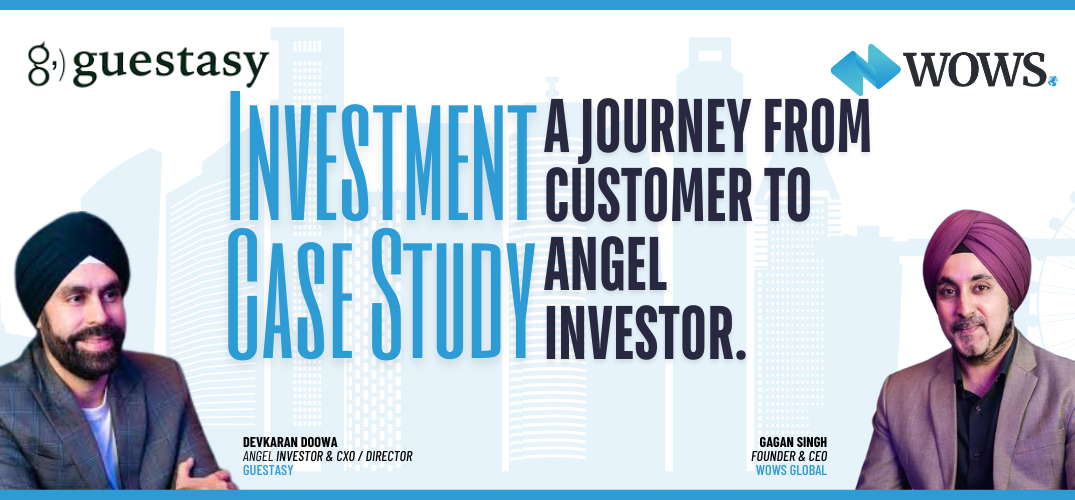
From Customer to Investor: Devkaran's Inspiring Journey with Guestasy
Devkaran Doowa’s journey from Guestasy’s customer to investor and CXO offers powerful lessons for aspiring angel investors. Learn how his hands-on approach de-risked his investment and contributed to the startup's success. -
Startups Aspire Singapore Events Southeast Asia startups 4 minutes
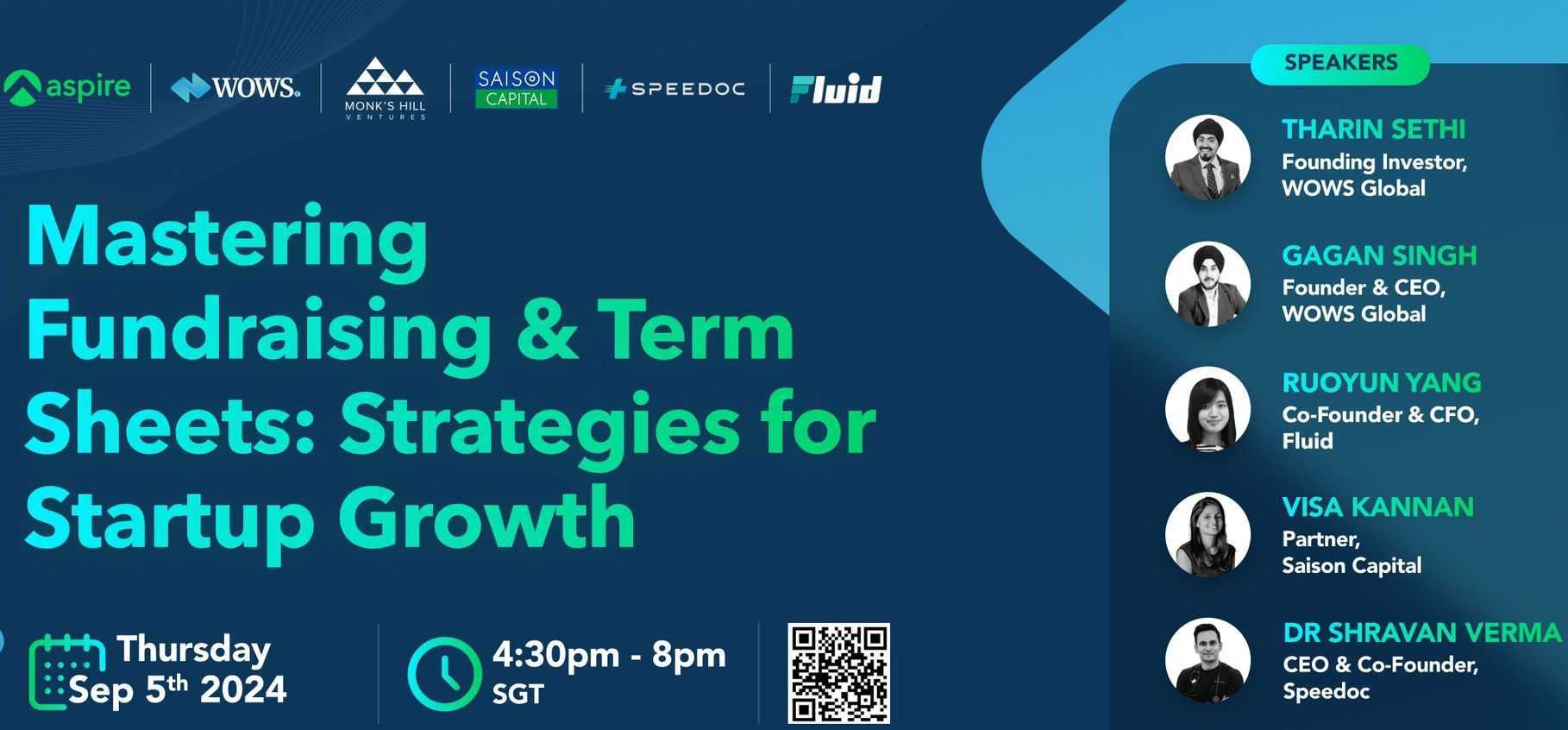
Empowering Southeast Asia’s Startup Ecosystem: A Strategic Event at Aspire Singapore
Join WOWS GLOBAL and Aspire in Singapore on September 5th for an empowering event designed to guide SEA startups through successful fundraising and fair term sheet negotiations. Learn from industry experts and network with top investors and founders.